The number is not final
We are planning around about 300 pages. The exact count firms up as ad sales come in and the portrait counts land, and it moves every year. Nobody should be quoting a precise number in September.
One book, roughly 300 pages. It prints once. Every page is finished by March 18, and then it lives in people’s houses forever. Everything on this page exists to make that survivable.
Working out where we are in the year.
Seven gates. Every one a Thursday. Hit them and everything downstream takes care of itself. Miss one and it does not stay a small problem for long.
Working out where we are.
We are planning around about 300 pages. The exact count firms up as ad sales come in and the portrait counts land, and it moves every year. Nobody should be quoting a precise number in September.
Senior ads and student and staff portraits take a serious share of the total before a single spread gets designed.
Those pages are not built from scratch, which sounds like a gift and is not. They are blocked on other people: families buying ads, businesses sending artwork, the portrait vendor delivering files. You cannot hustle your way through somebody else’s calendar, so those two get chased early and often.
These dates are ours, and they are the only ones you need. Behind them is a printing plant that runs a schedule for a thousand schools and does not care that our photographer got mono. That is why these do not move. Not because I am rigid about it, but because the thing standing behind them is not a person you can talk to.
All seven weigh the same. There is no small gate, no practice gate, and no gate where a missing page quietly gets absorbed. A page that is not in on Thursday is a hole, and a hole does not fill itself in later.
You cannot cover what has not happened yet. Spring sports are not due in the fall, and no amount of hustle changes that. The ladder is already built around it, so if a page feels impossible, check whether the thing is even over.
Pages die at the front, not the back. Every late spread in the history of this class was late because nobody took the photo, not because nobody did the layout. Photo call first. Always.
Five steps, in order, no shortcuts. Shoot RAW. Cull. Edit in Lightroom Classic. Export to the preset. Upload to your labeled folder. Then it goes into Walsworth.
Your sensor is a grid of about 24 million buckets that each catch light and report one number. That number is the only thing the camera actually knows. The color, the contrast, the punchy look on the back screen: all decisions somebody made afterward.
A JPEG is the camera making all of those decisions for you and then throwing away the evidence. It picks a white balance and bakes it in. It picks contrast and sharpening and bakes those in. Then it crushes each color channel from 16,384 brightness levels down to 256 and deletes detail it has decided you will not miss. It is usually right. It is also permanent.
RAW keeps all 16,384. That is the whole thing. It is why a gym shot at ISO 6400 that looks like a hostage video can come back, and why a face lit orange by whatever bulbs the district installed in 1987 can be white again in about four seconds.
And yes, it is huge. Three to five times a JPEG, every frame, because you are storing 24 million full readings instead of a picture somebody already finished. One football game on burst is twenty gigabytes. Bring the big card. Bring two.
.ARW, .NEF or .CR2. Ten seconds now, or a whole game you cannot use laterRAW+JPEG exists and you do not need it. It doubles your card usage to give you a file you were going to replace anyway.
Import with ADD. Add points at your files where they already are. Copy duplicates them somewhere else and quietly breaks the folder structure this whole page depends on.
P to keep, X to reject in the grid, then filter to flagged. That is the cull, and it takes ten minutes for 800 frames.
Sync Settings. Fix one photo from the gym, apply it to the other two hundred shot under the same lights, in one click. This is the single biggest time saver in the entire class and most people do not find it for a year.
A photo nobody can find did not happen. A photo nobody backed up never existed.
The numbers are not suggestions. A printer will not fix your bleed for you, and there is no round two.
8.5 × 11 in · standard0.125 in past trim on any edge the art runs off0.125 in minimum from the page edge for anything that must not get cut50C 40M 40Y 100K, total ink under 300%. Never use the Registration swatch300 dpi at final printed size. Line art 800 dpi2625 × 3375 px2550 × 3300 px2550 × 1650 px1275 × 1650 px1275 × 825 pxEvery camera in that cabinet clears the biggest of those about four times over. Which means the camera is never the problem.
Your photo has exactly one hard number: how many pixels it is. A shot off the A7 III is 6000 by 4000. That is the entire amount of information that exists, and nothing you do later adds any.
DPI is not a property of your file. It is an instruction about how big to print it. Same photo printed small packs those pixels tight and looks sharp. Printed huge it spreads them out and looks like a screenshot of a screenshot. The pixels never changed. The inches did.
The math is division and it is the only math on this page: pixels ÷ inches = the number that matters. 3000 pixels across a 10 inch page is 300. Across 20 inches it is 150. One file, two outcomes, no magic.
So here is the thing that will save you: opening a small image and typing 300 into the DPI box does absolutely nothing. It cannot add pixels. It just changes a note attached to the file, and the note is not the file. If the software offers to “resample” while it does it, that is worse, because now it is inventing pixels by guessing what was between the ones you had.
Instagram strips resolution on the way in. Screenshots are already tiny and cannot be un-tinied. A photo somebody texted you got compressed twice before it arrived. A logo you right-click-saved off a website is 200 pixels wide and was never meant to leave a browser. All four happen before anyone opens Photoshop.
JPEG forgets a little every time you save. That is the deal, and it is a good deal once. The problem is it does it again on every save. Open, tweak, save, five times over, and you are looking at soup with no way back. So: edit from the RAW, export to JPEG once, at the end. The JPEG is the printout. You do not edit the printout.
JPEG cannot hold a transparent background. Ever. Cut a mascot out, spend twenty minutes on the edges, export as JPEG, and your transparency becomes a white box that you will then place on a colored page. Cut it out, save as PNG. That is the whole rule.
A business emails you their logo off their website, it is 240 pixels wide, and it prints like a fax. Ask for vector the moment they buy the ad. The words are: “can you send the logo as an AI, EPS, SVG or PDF?” Half of them say yes instantly. The other half send a giant PNG, which is at least survivable.
RGB and CMYK, briefly. Screens make color with light and can hit colors that ink physically cannot. Print uses four inks. So the neon blue that looked incredible on the monitor comes back slightly sad and dusty, and nobody did anything wrong. Know it going in, do not discover it in March.
A photo does not get sharper because you needed it to.
Five minutes, with a parent or guardian, once.
One short form. It confirms you have both read this syllabus and the CRED rubric, and that you understand the two rules on this site that carry automatic penalties.
Not lowered. Not entered. CRED is 20 points and it sits empty until this form exists, which means your grade is incomplete no matter how good your pages are.
It is the easiest thing you will do all year and somebody forgets every single time. Do not be that person.
Sign in with your CCHS email, pick Yearbook Design when it asks which course, and do it sitting next to a parent or guardian. Both of you are signing. It takes about five minutes and it is the same form for every CTE class here, so if you are in Graphic Design or Game Dev too, you only fill it out once per course.
Four to six countable things, with a number attached, printed where everyone can see them. Nobody gets to argue about what their job was, because it is a list.
Show up to things. Games, performances, events. How much depends on your department, and it is on your sheet with a number next to it, not left to your conscience.
Keep the equipment safe. Represent the class. You are wearing the badge whether or not you are wearing the badge.
If you hold a chair you are in CENTAURUS, and club carries an average of 1.5 to 2 hours of yearbook work a week outside class, reported at the Wednesday meeting. Shooting, designing, filming, planning, selling. It all counts.
This is a condition of the chair, not a suggestion attached to it. Attendance slips, the chair goes. That is the deal you accept when you take the job, and it is the only reason a chair means anything.
If a job, a sibling, your own season or a ride home makes that genuinely hard, come talk to me early. There is a lunch shift, a home shift and a swap. There is not an opt-out.
Sometimes Graphic Design takes 17 spreads off the board, or you just get ahead. Spreads run out. Beat sheets do not. Bites & Banter still ships, the inbox still gets cleared, the shoot still gets scheduled.
There is no version of this room where you are done and therefore doing nothing.
If you hold a chair, this is the job, and it is smaller than it sounds. One question a day, fifteen minutes a week, four things a month.
Read your people’s reports. Ask the one question of anyone whose report is thin. Unblock it or bring it to me. Five minutes.
Design: what page are you on and what is stopping it. Outreach: what is in the next seven days and whose name is on it. Content: what ships today.
Fifteen minutes with your department. Design walks the page board. Outreach walks the calendar and kills any event with no name on it. Content locks the week.
Beat sheet hit rate, gate status, who is carrying and who is stuck, and one ask of another department plus one ask of me.
When somebody is not delivering: ask them, pair them with someone, reassign the page, then flag it to me. Reassigning a page is your call and it is not a punishment. It is what a section editor does, it happens at every real publication, and the book does not care about anyone’s feelings in March.
This page is the reference now. Discord is for things that stream, this is for things that stay.
The Z5 shoots 4.5 frames a second. The Sonys shoot around 10. It is a good camera and the wrong camera for a basketball game, and “which body did you take” is the invisible reason half of anyone’s sports photos come back unusable.
The Z5 and A7 IV write to two cards at once. For anything that happens exactly once, graduation, the last home game, a senior session, use the backup slot. You cannot reshoot a thing that already happened.
Shutter, aperture, ISO, focus, lenses, and settings recipes for the four situations that cover almost everything: the gym, the stage, midday sun and the classroom.
Same shape as Graphic Design, on purpose, so the two rooms run on one clock. Draft first, two signatures second, spread third. Always that order.
Thirty minutes on the idea, then I demo the one technique that is miserable to learn from a video. Assignments drop and you draft. You leave week one holding a plan, not a page.
Your department head signs it, then I sign it, then you make the real thing. Nothing gets built on one signature.
Work goes up, the room tears it apart, you take notes. Critique under a different name, because here the stakes are typos.
Thursday. Pages in. Then Friday exists, which is the entire reason the gate is Thursday.
Spreads are not due every week. Drafts are.
A draft is cheap and a finished spread is not. Rebuilding a page you already designed costs you a weekend. Redrawing a thumbnail costs you ten minutes, which is the entire reason we do it in that order.
A layout sketch, the photos you need, the copy angle, and who you have to talk to. It can be ugly. It can be on paper. It has to be specific.
Your department head signs off, and I sign off. Both, every draft, no exceptions. One signature is not approval, it is half of one, and building on half an approval is how a page gets made twice.
Two people because it is two different questions. Your chair is asking whether it fits the section. Six volleyball spreads that all look like each other is a chair problem. I am asking whether it fits the book, whether the coverage is honest, and whether anything in it cannot be un-printed.
Once it is approved, it is the plan. Changing it after that is a conversation, not a whim.
Now you build it, in Walsworth, to spec, from photos that exist. This is the part everyone thinks is the whole job. It is the last third of it.
A draft names the photos it needs, and that list is how Outreach knows what to shoot. No draft, no photo request, and then a page sits half-finished in February waiting on a picture nobody knew to take. This is how spreads actually die, and it is entirely preventable in week one.
Post your progress report in your department channel. Thirty seconds. What you did, what is stopping you.
45 seconds out loud to the room, then fifteen minutes with your department. Everyone talks. No passing.
Do the one thing that phase asks for. The panel at the top of the ladder tells you which phase you are in and what it wants.
1.5 to 2 hours on yearbook, and you report it Wednesday. Shooting, designing, filming, planning, selling. It all counts.
Walsworth, the grid, and how a spread is actually built.
Lightroom Classic: cull, correct, Sync Settings, export.
Type and hierarchy, or why your spread looks amateur.
Interviewing, and copy that is not a caption.
Dominant, modular layout, eyeline.
CMYK and color, and what prepress does to your beautiful screen colors.
Proofing and error hunting. The last push.
Written, in your department channel, every day. It is thirty seconds and it is how your chair knows you are not stuck, how Dojo-kun scores you, and how anybody reconstructs what happened when you were absent.
What you did, what is stopping you, what you need. Forty-five seconds. No exceptions, no passing, no “same as him.” It is the fastest way to find out that two people are waiting on each other.
Three buckets, three criteria, one check-in a month. If you can hold that in your head you can predict your grade at any moment, which is the whole point.
What you owe, defined by your department’s beat sheet. Design produces spreads. Content produces posts and editorial. Outreach produces shoots, events and sales. Scored against your assigned load, not a page count. Three clean spreads and eleven clean spreads both score a 5.
The same rubric as every other CTE class in this building. Participation, communication, punctuality, care for the room and the gear, and being someone people can work with. Floors at zero, so a bad month cannot eat the rest of your grade.
Whether the job you hold actually got done. Scored monthly on a rolling four-week window, on two axes: Cadence, did the countable things happen at the stated rate, and Craft, were they any good. Chairs get a third axis: their department.
Each one scores 1 to 5, on the same scale as Graphic Design. 5 ships, a printer would take it and run. 4 is one round of notes away. 3 meets the brief. 2 attempted. 1 barely engaged. 0 missing.
CRED covers flaking on a person. You said you would shoot the game and your partner got stranded there alone. Role covers missing the beat sheet. You owed three posts and shipped one. Different failures, different buckets, you never pay twice for the same thing.
Thursday is the deadline. There is no Friday version of Thursday.
If something does land after it, turn it in anyway. I would rather have a late page than a hole in the book, and a late page still scores. It just scores less every day it sits: a 3, then a 1, then a 0 once the next gate arrives. That is not a grace period, it is a countdown, and it starts Thursday afternoon.
A Power Pass is the only extension that exists, you have to have earned it, you have to spend it before the gate rather than after, and it does not work on every gate. Turning up on Friday with a story is not an extension.
Your spread is turned in by existing in Walsworth, correct, by Thursday. There is nothing to upload and nothing to submit. The page either is there and right, or it is not.
Photos go to the class Drive, in your labeled folder, with the link posted. Your self-assessment goes on Canvas, once a month. That is the whole list.
You assess yourself before I do. It is short and it is honest, and it is the single most expensive item in CRED to skip: late is −5, missing is −20.
It exists because the fastest way to find out whether somebody actually knows how their month went is to ask them first. Most of you are harder on yourselves than I would have been.
The scenario deck for the June final. Published in advance, same as Graphic Design, so you can see every scenario before you draw one.
You can walk this campus with a camera during 4th period. Almost nobody in this building can do that. Take advantage of your privilege.
This is not a perk we tacked on. It is how a third of the book gets photographed. Games and rallies happen after school. Classes in session happen exactly once, during the day, and this is the only window where a student with a camera is allowed into somebody’s Chem lab. Academics, electives, AVPA and CTE all live or die here.
So the period is zoned, not negotiated. Design is in, Outreach is out, Content splits. Two exceptions and they are absolute: workshop week and gate week, everybody is in the room.
Friday games cost nothing if they get taken away. Campus roaming rights die permanently the first time one person wanders, films something they should not, or walks into a testing room. A teacher complains to an AP, the AP says no more, and that is the end of it for everybody, forever. There is no appeal and I will not win it.
So this privilege gets the most rules, not the fewest. Knock. Ask the teacher, do not just walk in. If they say no, leave, and log it so nobody asks them again this week. Never shoot a test, a quiz, a screen or a whiteboard without reading the entire frame first. Log what you shot and where. Come back when the bell rings.
Three departments, three leadership structures, and one sentence that keeps them straight: club officers run the club, chairs run the book, reps run the wire.
The faces of Yearbook. Multiple posts a week, filming, editing, captions, interviews, trends, and being the people the school actually recognizes.
Owns two named weekly properties: Bites & Banter and the Weekly Update. Also owns editorial spreads: features, reviews, interviews.
The front of the pipeline. Runs the yearbook inbox and the calendar, tracks every game and award, works with ASB, admin and clubs, sells the book, runs events and booths, and coordinates distribution.
And holds the cameras. Schedules the shoots, sets up the photo booths, takes the pictures. Design cannot build a spread out of photos that do not exist.
Section owners and the people who actually build pages. Photoshop, Lightroom, Walsworth, Canva, whatever gets it done right.
Every designer also proofs somebody else’s pages before each gate. You are worse at catching your own mistakes than you think.
The class is the credit and the production floor. CENTAURUS is the club: Wednesdays at brunch in the Tech Center, plus after school, plus 1.5 to 2 hours a week of yearbook work outside class that you report at the meeting.
Club members carry a permanent press badge: access to the school and to games, priority on equipment, and real authority over what goes in the book. Not in the class? You can still join as an advisor. You just do not get the badge or the vote.
Three conditions, no judgment call: be a Year 2, be in club, keep your attendance. That is it. Nobody is picked because I like them.
Year 1 is staff and learns the beat. Year 2 is the chair, the responsibility, and the authority. It is not a heavier page load, it is a heavier job.
Reps are the on-ramp. Two per department, paired one to one with a counterpart in ASB, and you do not have to be a Year 2 to hold one.
You will photograph your friends. Everybody does. That is not a character flaw, it is proximity: the people who are near you, who answer, who say yes, end up in the book.
The job is not to pretend you are above that. The job is to notice you are doing it and walk somewhere else.
We have fixed this twice. Both times we fixed the group and not the mechanism, and both times a different group quietly took over the next year. Different kids, same physics. So this year it is a mechanism.
At a set gate we run every student against the book and pull the ones who are not in it at all. Then we assign shooters to them by name. It requires counting, which is why almost no yearbook does it, which is why almost every yearbook has forty kids in it zero times.
The proximity problem is us. So Yearbook kids and our immediate friend groups carry the tightest cap in the book, and the chairs enforce it on each other. A rule that exempts the people writing it is not a rule.
If you pick who to feature, you pick who you know. So the niche beats get assigned like any other spread. Somebody owns the six-person clubs, the kid who does something strange and excellent, the custodial staff, the 5AM swim practice.
The coverage log tracks both, because social proximity and schedule proximity are the same bias wearing different clothes. You can only shoot classes that meet 4th period, so without tracking it the academics section becomes a portrait of whoever happens to teach then.
The counts live behind our class login, never on this page, because a public list of who appears how many times is exactly the document that should not exist.
He reads your daily post, looks at your screenshot, and hands you a number out of 4 with one sentence explaining why. Same day, every day.
4 out of 4 is full credit and it should feel like a win, not a ceiling you clawed your way to. 5 exists, it is extra credit, and it is rare on purpose: it wants real reasoning, not more words. No screenshot, no credit. It feeds your CRED.
Dojo-kun has been running in Game Dev for a while. This is his first year in Yearbook, so he will be wrong sometimes, and your job is to say so when he is. Feedback shapes him. You are not being graded by a machine, you are helping build the machine that is grading you, which is a weird sentence and also true.
The bot scores. I decide. I can override any number he gives you, and if you think he got one wrong, say so in your channel. Nobody’s grade rides on a bot in alpha.
Dojo-kun runs on a PC in this room. To score a post he sends what you wrote and what you attached to Claude, and gets back a number and a sentence. That content is not used to train anything: Anthropic’s terms say inputs and outputs from their API are not used for model training. Read it yourself.
Your grades, the roster, and anything from your district record stay in this room. If you ever want to know exactly what gets sent, ask me and I will show you the code. It is my code.
You run it. I sign it off.
This room is student run and I mean it literally. You pick the theme, you decide what goes in, you assign your own people, you run your own meetings, and your names are on the finished thing. That is the actual arrangement, not a nice gesture, and it only works if you make real decisions and then live with them.
I am the editor. I steer the direction once we land on a theme, I hold the line on it when it starts drifting in February, and I am the last set of eyes before three hundred pages become permanent. On the calls that define what this book is, and on anything that cannot be un-printed, I have the final word. Everywhere else, you do, and I would rather argue with you about it than decide it for you.
In practice that authority lives in one place: every draft needs my signature and your department head’s before it gets built. That is deliberate. A final say that only shows up at the end is a veto, and a veto lands after you have already done the work. Signing at the draft stage is steering, which costs you ten minutes instead of a weekend and is the only version of this that respects your time.
The cover is mine by default and yours the moment you take it. I usually design it, because I can, and because somebody has to. That is the only reason. Show me you can carry it and it is yours, and I will happily spend that week doing literally anything else.
Not because I stopped caring. Because a room that needs me standing in it every day is a room I am running, and I already told you this one is yours. The measure of whether any of this worked is how little you needed me by March.
So treat me like a summon. You call me for:
Everything else is you. And the year I walk into a Wednesday meeting and find out you already handled all five without me is the year this actually worked.
Students own the what and the how. Nobody owns the when. The gates, the specs, the privacy rules and the plant calendar are fixed and external, and they are fixed precisely so everything inside them can be yours. The structure holds the edges so you can run the middle.
A bad essay gets a grade and disappears. A yearbook error gets printed a thousand times and sits on a shelf in somebody’s house for forty years. Misspell a senior’s name and you have misspelled it permanently. Leave a kid out and they stay out.
Nobody is trying to scare you. It is just the actual stake, and you should know it on day one instead of finding out in April.
You got to the bottom. Now go do the five minute thing.
One short form, with a parent or guardian, confirming you have both read this page and the CRED rubric. Until it is in, 20% of your grade cannot be entered. Not lowered. Not entered.
CCHS email, pick Yearbook Design I or II, sit next to a parent. Somebody forgets every year and it is always the person reading this sentence.
OLYMPIAN did not start with us. There is a 1962 edition sitting in this building, and a 1988, and a 2019, made by people who sat in these chairs and worried about the same deadlines.
Every year the staff picks a new name and a new look, and every year it is still the Olympian. That is the part worth understanding: you are not making a book, you are taking a turn.
Covers by decade, pulled from the archive. If you have an old Olympian at home, or a parent who does, bring it in. This is a real project and it needs real books.
Shooting for the feed
Content is the only department whose work the whole school sees the same week it is made. That is the fun part and the dangerous part.
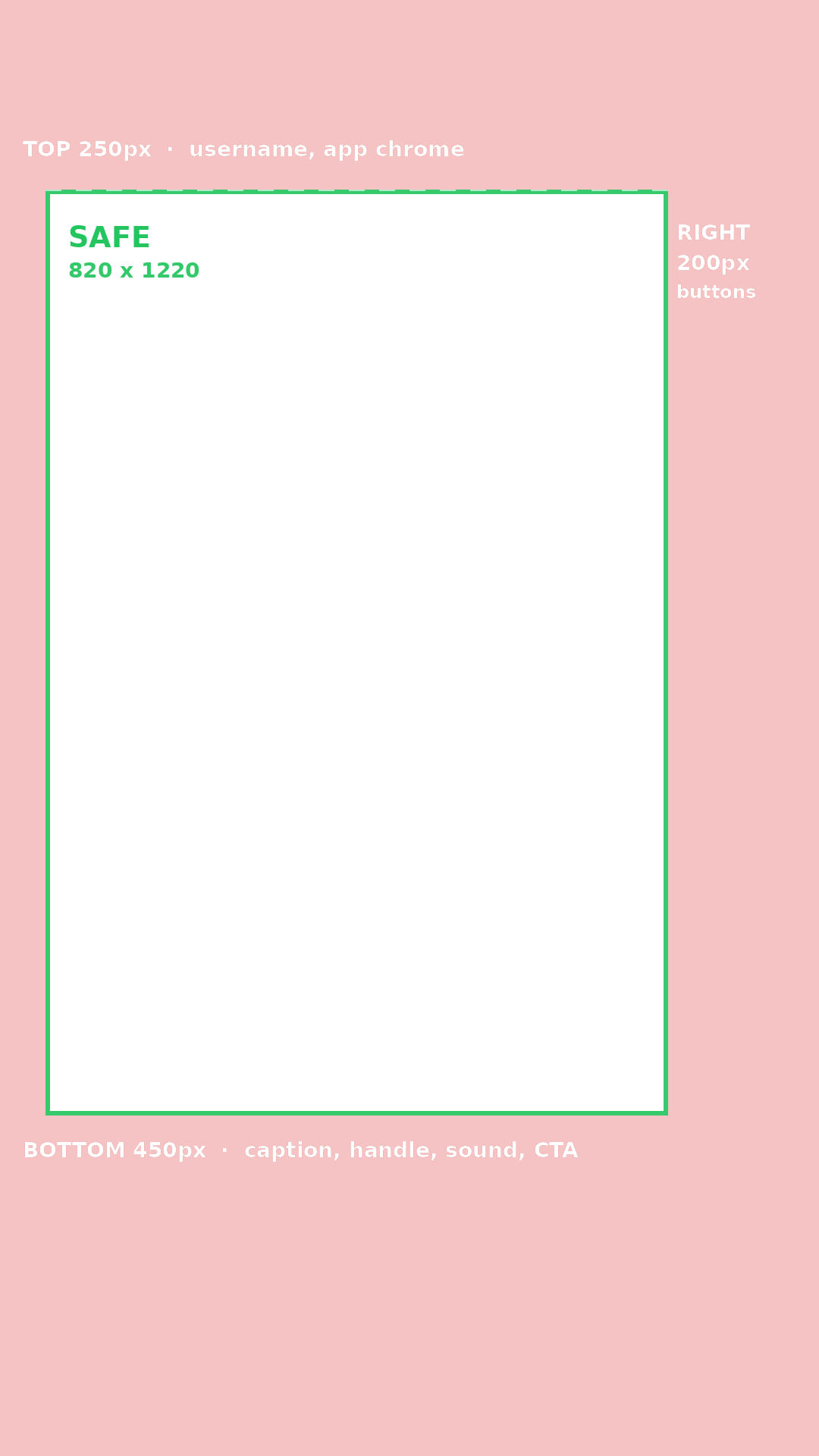
1080 × 1920· 9:16 vertical1080 × 1350vertical, or1080 × 1080square. Vertical winsThe apps put their own furniture on top of your video: your username up top, the caption and sound and follow button across the bottom, the like-comment-share stack down the right. Anything under that furniture is gone. Faces, text and logos live inside the safe zone or they do not exist. Grab the overlay from the toolkit, build inside it, delete the layer before export, then check it on an actual phone, because these apps move their buttons whenever they feel like it.
Cut it in Resolve
DaVinci Resolve is the editor. It is free, it is what actual post houses cut on, and its color tools are the entire difference between video that looks like a school made it and video that does not. It is on the machines in this room and it runs fine on them.
Give it one real afternoon on something that is not due tomorrow. The first hour is not friendly and every hour after it is, and you will be using it long after this class.
The caption is not decoration. The first line is the entire game, because that is all anyone reads before deciding. Give people something to actually read after it: a fact, a name, a joke, a reason to care. Ask something worth answering, because a comment is worth more than a like. Hashtag piles do nothing. A sentence somebody screenshots does everything.
Publishing a student’s full name. The post comes down immediately and it costs you grade points. First name, last initial, every time, in every caption, tag and credit. The rule is about what we write: a last name printed across the back of a jersey is a football uniform, not a violation.
Posting without approval. Also costs grade points. Not because your judgment is bad, but because you are posting as the school, to the school, and a joke that kills in fourth period reads differently to a parent at 9pm.
These are layered, not parallel. Approval is the prevention. The name rule is the backstop. And approval is not a rubber stamp: I give notes and the notes get acted on. Ignoring them is the same failure as never asking.
Who is giving the notes: I founded and ran the global content and community team at Razer, then ran US programming for Red Bull Gaming. I have opinions about your caption and they are load-bearing.